


"Military jacket" is one of those search terms that hides two different buyers. The first is a fashion or streetwear brand chasing the M-65 silhouette and the MA-1 bomber — the jacket Robert De Niro wore in Taxi Driver still moves units fifty years later. The second is a tactical, hunting or work-adjacent buyer who cares about fabric weight, pocket construction and whether the cuffs survive a season of abuse. Both type "military jacket" into Google. Both write very different purchase orders.
This guide covers both: the family tree of styles that actually gets ordered, what "mil-spec" legally means (and where it does not apply), the fabrics and hardware that define each type, and the spec-sheet details that decide whether a batch passes inspection.
The military jacket family tree
| Style | Introduced | Original role | What gets ordered today |
|---|---|---|---|
| M-1943 field jacket | 1943 | WWII cold-weather combat layer | The template every field jacket descends from |
| M-1951 field jacket | 1951 | Korean War update; snap placket, button-on hood | Mod-culture fishtail parka (M-51); niche field replicas |
| M-65 field jacket | 1965 | Vietnam-era cold-weather coat, hood hidden in collar | The commercial bestseller — fashion, workwear, crossover |
| MA-1 bomber | 1949 | USAF flight jacket; replaced leather with nylon | Streetwear staple, the most fashion-forward of the family |
| CWU-45/P | 1977 | Nomex fire-resistant flight jacket | Premium replica market; aviation-heritage brands |
| N-3B snorkel parka | 1950s | Extreme-cold aircrew parka, fur-trimmed snorkel hood | Winter streetwear parka |
| ECWCS shells | 1980s– | Layered cold-weather system with waterproof laminate | Technical 3L shell market; see 3L vs 2L construction |
One lineage note that earns credibility in spec conversations: every field jacket descends from the M-1943. The M-1951 added the snap placket and button-on hood for Korea; the M-1965 then replaced the detachable hood with the zip-in collar version, switched button cuffs for Velcro, and moved the shell from cotton sateen toward NyCo. When a buyer says "M-65 but with the M-51 hood", they are describing a real, historical combination — and a factory that understands the three-step evolution will not misread the tech pack.
The M-65: seventy percent of commercial orders
The M-1965 field jacket — officially "Coat, Cold Weather, Field" — was designed for the US Army under the MIL-C-43455 standard and stayed in service until 2009. Its anatomy explains why it still dominates commercial production: four front pockets (two chest, two hip), a hood that zips into the collar, a storm flap over the front zipper, Velcro on cuffs and collar, and a button-in insulated liner for real winter.
The construction details matter when you spec one. The original ran in wind-resistant cotton sateen in OG-107 olive; from 1966 shells moved to a 50/50 cotton-nylon blend (NyCo) with a water-repellent treatment. The zipper changed three times across the jacket's life — aluminum, then brass from 1972, then nylon from 1986 — which is why replica sellers argue about hardware today. Civilian versions have existed since the early 1970s, in colours and patterns the US Army never contracted: tiger stripe and most MultiCam M-65s on the market are commercial product, not surplus.
Our military garment programme builds M-65 styles on NyCo twill and ripstop, with the liner as an optional module — the same jacket sells into spring and winter markets with one BOM change.
The MA-1 bomber: the fashion half of the market
The MA-1 arrived in 1949 to replace the leather and shearling flight jackets of the propeller era — jet cockpits were cramped, wet and fast-moving, and leather soaked and stiffened. The MA-1's nylon shell with knit cuffs, knit waistband and a lightweight batting lining solved it. The famous detail is the reversible orange lining: a downed pilot could wear the jacket inside-out to make himself visible to rescue crews. That lining is now purely a design signature — but buyers still specify it, and a factory that ships grey linings to an MA-1 order will get the batch rejected.
Bombers are the easiest military style to modernise: swap the batting for a thin fleece, taper the body, and the silhouette carries a premium brand. They are also the style where sizing causes the most rework — the knit trims and cropped body leave less tolerance than a field jacket.
CWU-45/P and N-3B: the connoisseur styles
The CWU-45/P replaced the MA-1 for US aircrews in 1977 in fire-resistant Nomex, with bellowed cargo pockets and a double-pull zipper. Genuine Nomex drives the price of premium replicas; most commercial orders substitute aramid blends or FR-treated polyester and should be labelled honestly. The N-3B snorkel parka — 1950s extreme-cold aircrew issue — survives as a winter streetwear parka with the distinctive fur-trimmed (today, usually faux) snorkel hood and full-length storm flap. Both styles command loyal, repeat buyers who know the details.
Mil-spec vs military-style: the honest section
This is where most sourcing content goes vague, so here are the three hard facts.
- "Mil-spec" means a specific military standard. The M-65 was built to MIL-C-43455. A jacket is only mil-spec if it is produced and tested against a current military specification — not if it looks like one.
- NIR-compliant fabric is restricted technology. Modern military cloth is dyed to manage its near-infrared signature, so troops do not glow in night-vision equipment. That dye technology is controlled and is not available on the commercial market. Any "military-style" jacket made offshore uses standard dyes — which is exactly what the commercial market requires.
- The Berry Amendment closes US defence procurement to offshore makers. US law (10 U.S.C. §2533a) requires Department of Defense clothing, fabrics and fibres to be produced in the United States. Genuine US military contracts are simply not open to overseas suppliers.
So what does the global market actually consist of? Commercial tactical brands, fashion labels, hunting crossover, security companies and airsoft retailers — buyers who want military-grade construction, military patterns and military durability, for customers who will never be issued a uniform. That is the honest positioning, and it is a large, stable market: the M-65 has been a commercial garment for over fifty years.
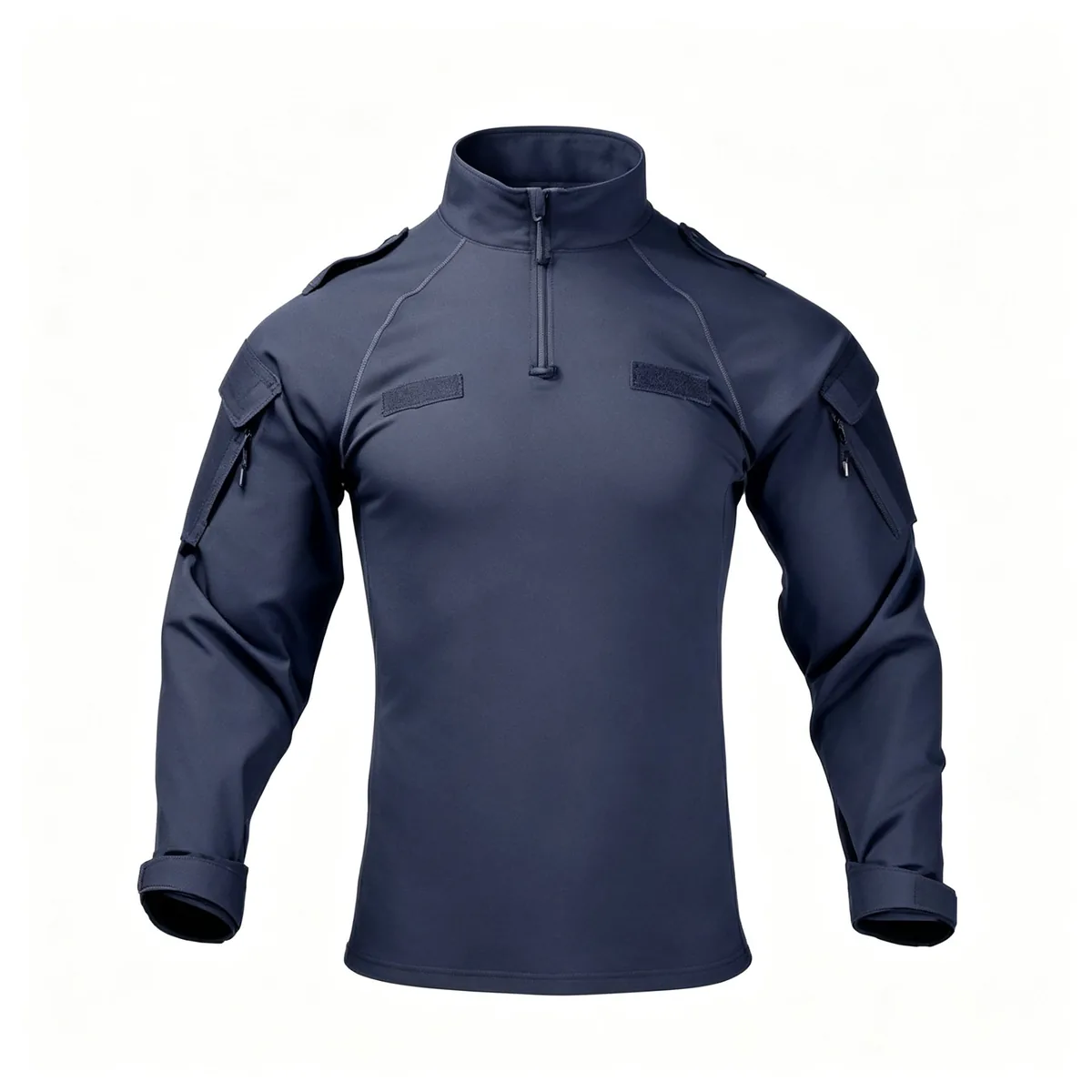
Fabrics and construction: the spec sheet that matters
| Component | Standard spec | Premium option | Spec-sheet note |
|---|---|---|---|
| Shell | NyCo 50/50 twill or ripstop, ~200–240 gsm | Higher-density ripstop, DWR finish | State gsm and weave; "NyCo" alone is not a spec |
| Liner | Button-in quilted poly batting | Primaloft-style sheet insulation | Module = one BOM, two seasons |
| Zipper | Heavy-duty brass, double-pull | Nickel-free antique brass | Storm flap over zip is part of the silhouette |
| Cuffs | Velcro tab closures | Velcro + knit inner cuff | M-65 was among the first garments to use Velcro |
| Pockets | Four flat pockets, bar-tack corners | Bellowed cargo pockets | Bar-tacks are the #1 QC failure point |
| Colour | OG-107 olive, black, navy, khaki | MultiCam (licensed), woodland | MultiCam printing requires a licence — verify it |
Two fabric notes. First, cotton sateen — the authentic M-65 shell — shrinks; a factory that cuts to finished measurements instead of allowing shrinkage will ship a batch a size small after the first wash. Second, camouflage patterns are not all free: woodland and the older digital patterns are public, but MultiCam is a proprietary pattern that requires a printing licence. If a brand asks for MultiCam, the licence question comes before the price question.
Sourcing checklist for military jacket production
- Sizing system: original jackets used alpha sizing (S–XXL) with height splits — decide early whether you run alpha or numeric sizing, and set tolerance per size.
- Shrinkage allowance: cotton-rich shells must be pre-shrunk or cut oversized; state the allowance on the tech pack.
- Hardware spec: zipper brand, pull type, snap finish — brass vs nylon changes both cost and the replica-accuracy argument.
- Seam construction: double-needle felled seams on shell; bar-tacks at every pocket corner and stress point.
- Liner compatibility: if the liner is a module, spec the button positions and test the mated pair, not just the jacket.
- Batch consistency: olive drab drifts between dye lots; approve a physical lab-dip per lot, not a Pantone number alone.
- Labelling honesty: commercial jackets should not be labelled "genuine military issue" — in most markets that is a misleading-claim risk, not a style choice.
Where military styles cross into your other categories
Military construction is a short step from two categories we build anyway. Hunting: the same quiet outer shells, scent-control fabrics and layering logic, with blaze-orange compliance on top — see our hunting clothing programme. Technical shells: ECWCS descendants are 2L and 3L waterproof laminates, which is exactly the technology debate in 2L vs 3L fabric. A supplier who can build a 3L ski shell can build a modern military-spec parka; the machinery list is the same, only the pattern and trim change. See also our windbreaker programme — the lightest expression of the same shell technology.
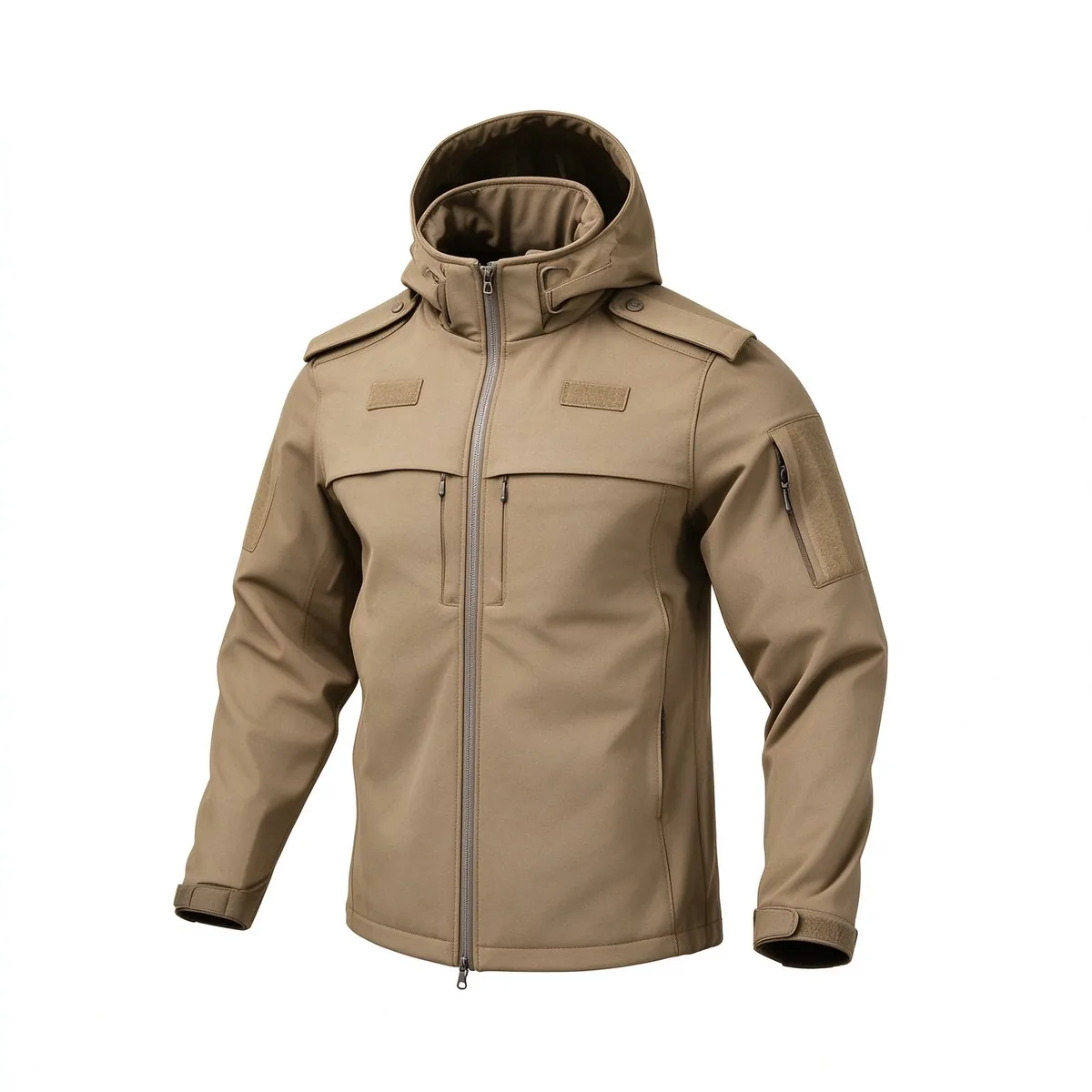
Which style for which buyer
| If this is you | Order | Why |
|---|---|---|
| Streetwear or fashion label | MA-1 bomber, nylon shell, orange lining | The silhouette carries the price; iterate trims and colourways each season |
| Workwear or utility brand | M-65 in NyCo, liner as a module | One BOM covers spring and winter; the four pockets are the selling feature |
| Tactical or security dealer | CWU-style or field patterns with MOLLE options | Buyers test construction, not heritage; bar-tacks and hardware decide repeat orders |
| Outdoor brand crossover | ECWCS-style 3L shell in military palette | Same laminate production line as your ski shells; different pattern and trim |
| Promotional or budget channel | Lightweight MA-1 variant, poly batting | The look at entry cost; skip the brass hardware and bellowed pockets |
Frequently asked questions
What is an M-65 jacket?
A cold-weather field jacket adopted by the US Army in 1965, with four front pockets, a hood that zips into the collar, a storm-flapped front zipper and a button-in insulated liner. It stayed in military service until 2009 and has been a commercial style since the early 1970s.
Why do bomber jackets have orange linings?
The MA-1's reversible orange lining let a downed pilot turn the jacket inside-out for visibility to rescue crews. Modern versions keep it as a design signature — and buyers still specify it.
What does mil-spec actually mean?
Production and testing against a specific military standard, such as MIL-C-43455 for the M-65. A jacket that merely looks military is military-style, not mil-spec — and US defence procurement is closed to offshore makers under the Berry Amendment anyway.
Are military jackets warm?
The shells alone are wind-resistant, not warm — warmth comes from the button-in liner or insulation choice. This modularity is why the same pattern sells into both spring and winter programmes.
What is the difference between tactical and military jackets?
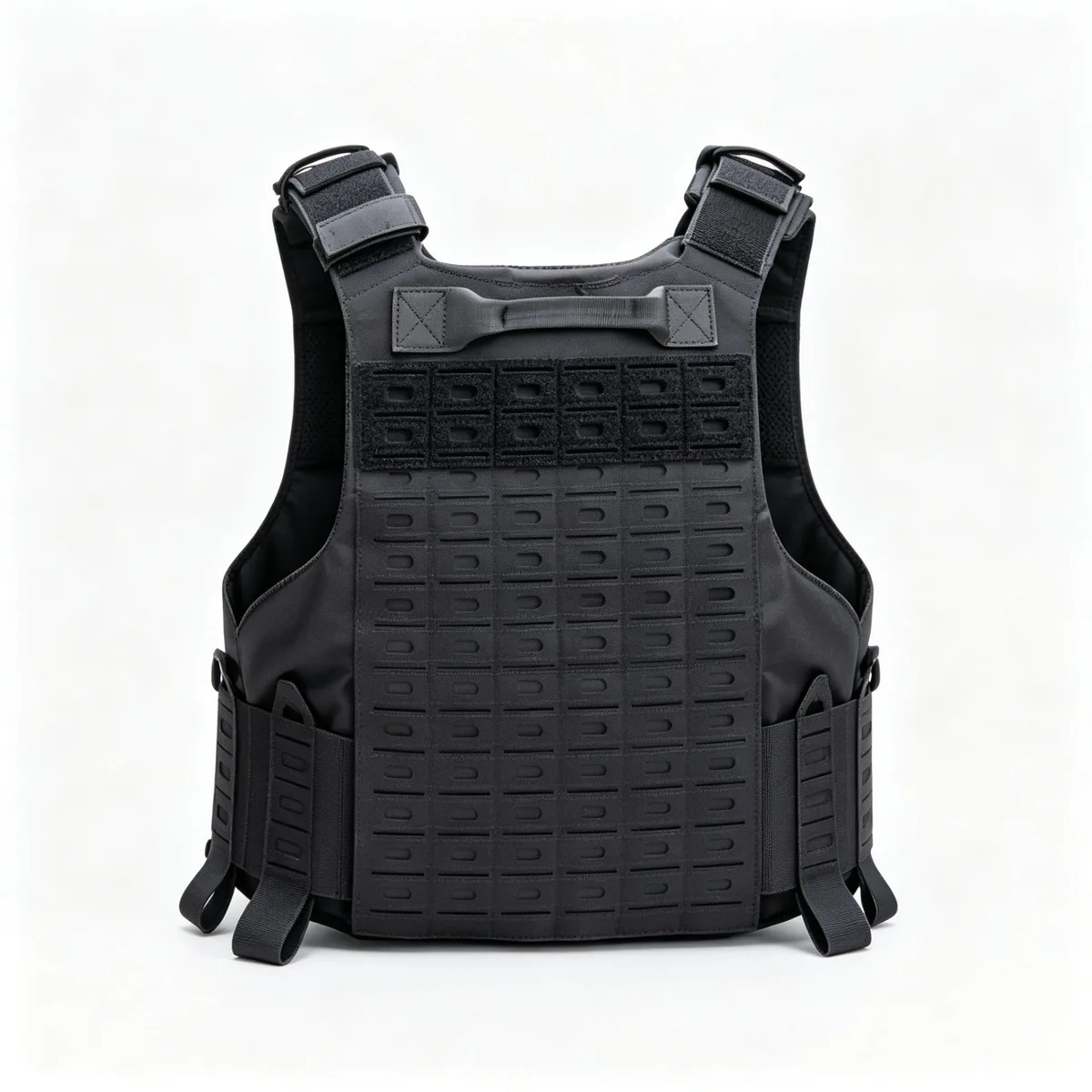
Military jackets follow issued patterns and heritage specs; tactical jackets are built for the commercial equipment market — MOLLE-compatible pockets, modern softshells, no heritage constraints. The construction quality overlaps; the pattern libraries differ.